


 Advanced Search
 « Go back« Go backPrevious Product (ICM48161)Next Product (ICM48801)
ICM UK ICMDS4803



- Description:
-
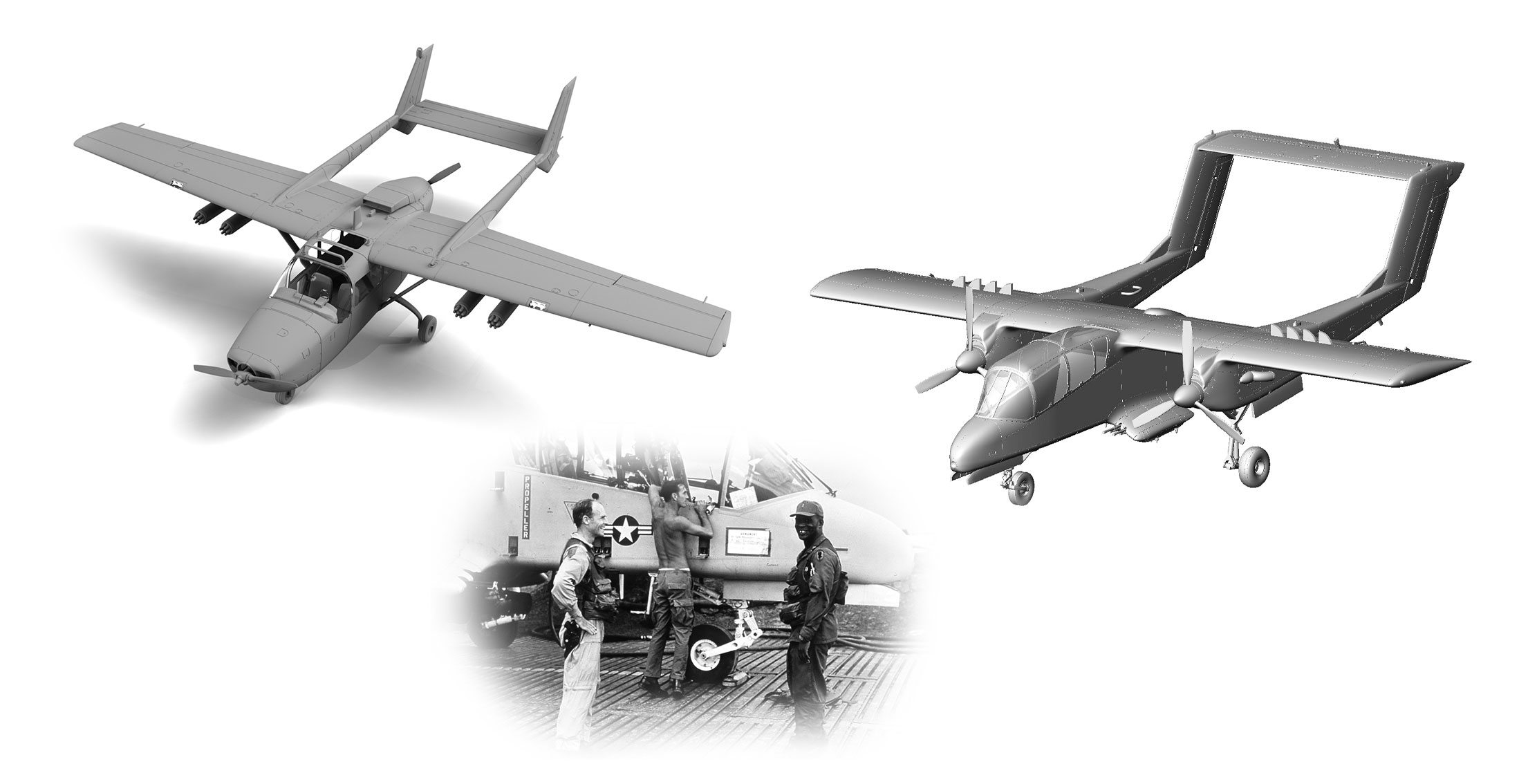
Vietnam USAF Airfield (Cessna O-2A, North-American/Rockwell OV-10D Bronco US Pilots & Ground Personnel (Vietnam War) (5 figures) Diorama Set. During the Vietnamese War, the US armed forces made extensive use of combat aircraft. Aircraft were used for a wide variety of missions and played a significant role in this conflict. The most heavily used aircraft were the Air Force, the Navy, and the United States Marine Corps. The American army also had its own aviation, which used aircraft mainly for reconnaissance, target designation and air assault strikes. The OV-10A and O-2 aircraft were used for direct support and support of the combat activities of the troops. So, OV-10A performed the functions of aircraft controllers, observation aircraft and light a[+] More...
- Manufacturer:
- ICM UK
- Code Number:
- ICMDS4803
- Scale:
- 1:48
- Item type:
- Aircraft kits (injection)
- Price:
- £57.99 (Put this on Backorder and save 10%!)
- Order Quantity:
- Quantity In Stock:
 0
0
- Availability:
- This has sold out but will be back in stock again soon
- Wish List:
- Department:
- Catalogue
Here are some books and decals you might find useful for this kit
Found 15 related products
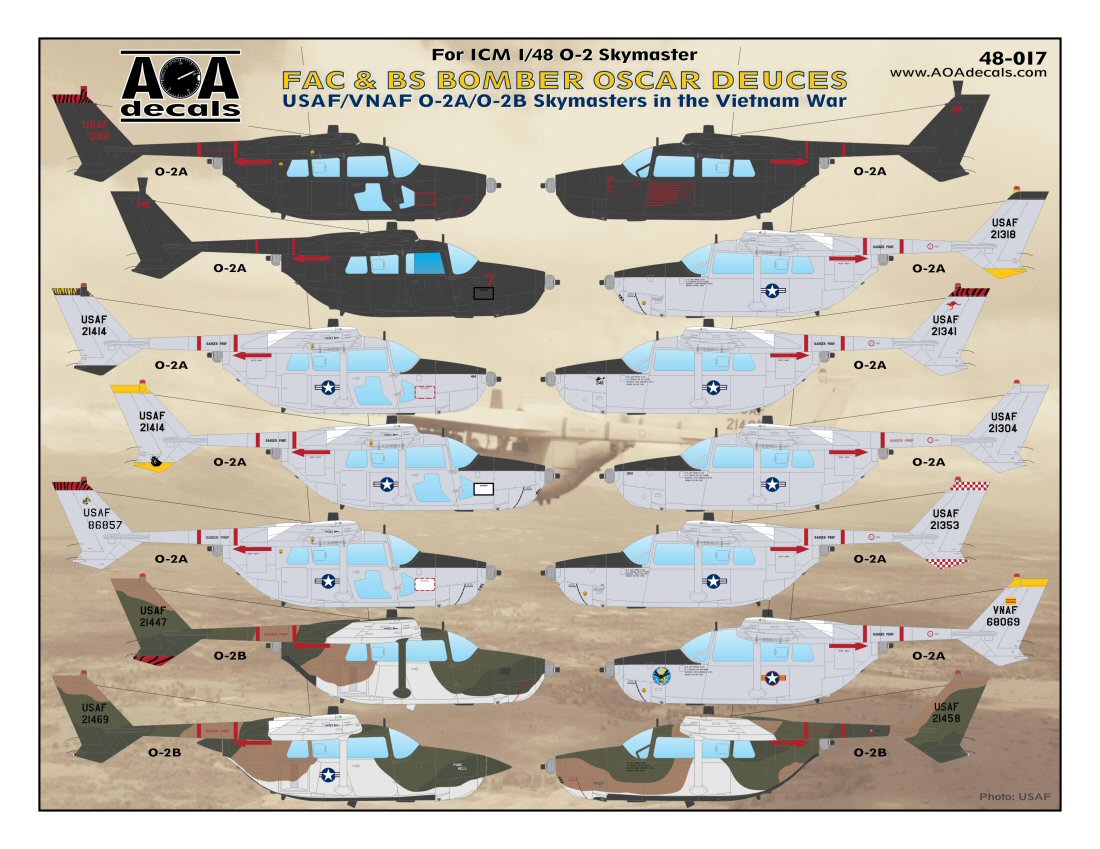 | AOA Decals - AOA48017 - 1:48 | FAC & BS BOMBER OSCAR DEUCES USAF/VNAF O-2A/O-2B Skymasters in the Vietnam War. This 1/48 decal sheet includes marking options for O-2 Skymasters in the Vietnam War primarily operated by the United State Air Force (USAF) in the Forward Air Controller (FAC) role. The O-2B, the psychological warfare variant, also served in the war utilitizing its leaflet dispenser and loudspeaker, earning the nickname of "bullshit bomber". The South Vietnam Air Force (VNAF) also operated a small number of O-2A Skymasters later in the war. 14 Marking Options Included: USAF - ten O-2A options (overall grey and overall black) and three O-2B options (camouflaged) [Please note: as of the date of this decal release, there is no O-2B kit or conversion available] VNAF - one O-2A option (110th Observation Squadron) Airframe data/stencil sets provided for TWO aircraft (variations of certain markings also provided). Stencils are based on original 1970 Cessna/USAF drawings and contemporary photographs during the Vietnam War period and are applicable to the early original small pilot's side window version depicted in the kit. Bonus markings of the large white THE FAC wing marking for overall black aircraft are also provided; however, the three overall black options on this decal release did not have this marking. This wing marking was possibly used by 21st TASS, whose Skymasters otherwise were overall black with very minimal red markings. Unfortunately during the research for this sheet, no serial numbers were confirmed for one of these aircraft marked with THE FAC wing marking. More | Aircraft decals (military) | Catalogue | £18.60 | |
 | AOA Decals - AOA48020 - 1:48 | "Tally-Ho on the FAC" - USAF North-American/Rockwell OV-10D Broncos in the Vietnam War. This 1/48 decal sheet includes 19 marking options for OV-10A Broncos used by the USAF in the crucial Forward Air Controller (FAC) role during the Vietnam War. Unfortunately, however, due to their generally nondescript markings, not all the schemes included are specifically identified to their applicable assigned Tactical Air Support Squadrons (TASS). One option included is a PAVE NAIL modified Bronco (with specific nose art); however, at the time of print, no PAVE NAIL kit or airframe conversion is known to be available. Ordnance loadout charts for USAF Bronco FACs in Vietnam are also provided. Also included with this release is full OV-10A airframe data and markings sheet 48-021 that covers one aircraft (including variations, landing gear placards, formation lights, etc) and also includes markings for ordnance commonly used in Vietnam. (The data and markings sheet is also available to purchase separately, see 48-021). More | Aircraft decals (military) | Catalogue | £15.99 | |
 | AOA Decals - AOA48021 - 1:48 | Airframe Data & Markings - USN/USMC/USAF "Tally-Ho on the FAC" - USAF North-American/Rockwell OV-10D Broncos in the Vietnam Wars. This combined service sheet provides complete OV-10A Bronco airframe data and markings (stencils) for one aircraft in either the original USN/USMC green over grey, Navy overall grey, or USAF FAC grey scheme. Includes multiple variations of types of cautions and warnings for USN/USMC and USAF, landing gear placards, tire slip indicators, formation lights, ejection seat markings, full sponson and wing pylon stenciling, and more. Also includes decals for ordnance common to early OV-10A Broncos such as various 2.75" FFAR and 5" Zuni rocket pods, SUU-11 and Mk.4 HIPEG gun pods, and also LAU-7 launch rails. This sheet is also included in sheets 48-019 and 48-020. More | Aircraft decals (military) | Catalogue | £11.99 | |
 | Caracal Models - CD48046 - 1:48 | Re-printed! USAF/VNAF Douglas A-1E Skyraider: Designed for the recent Revell re-release of the 1/48 Matchbox A-1E kit, our first "fat face" Skyraider sheet features markings for seven USAF and two VNAF aircraft; all from the Vietnam War era. The options on this decal sheet are: A-1E 132649, (aircraft flown by Maj. Bernie Fisher during the mission that won him the Medal of Honor) A-1E 132619, "Carolyn's Folly" A-1E 135007, "Miss Pussy Galore" A-1E 52-919 A-1E 135206, "Georgia Ann" A-1E 132528, "War Monger" A-1E 132612 A-1E 132628, VNAF A-1E 132503, VNAF More | Aircraft decals (military) | Catalogue | £15.99 | |
 | Caracal Models - CD48064 - 1:48 | North-American F-100D Super Sabre "Hun" in Vietnam - Part 1: The first installment of a two-sheet series chronicling the service of F-100 in Vietnam; this sheet features nine camouflaged "Huns" from different units. Many of these interesting options have not been done in decal form before. The sheet includes enough stencilling and national insignia to build any two of the aircraft featured on the sheet. The F-100 Super Sabre was one of the most important attack aircraft used by the USAF in Vietnam. Our latest decal sheet is the first instalment of our two-sheet series which will chronicle the service of "Hun" in Vietnam; and features markings for nine camouflaged Vietnam War jets: F-100D 56-3035 "Miss Dial", 306 TFS, Tuy Hoa F-100D 56-3053 "El Viejo Cazador", 510 TFS, Bien Hoa F-100D 56-3163 "Day Tripper", 308 TFS, Tuy Hoa F-100D 56-3456 "Darlene's Dear", 355 TFS, Tuy Hoa F-100D 56-2927 "Thor's Hammer", 309 TFS, Tuy Hoa F-100D 55-2932 "Nashville Sound", 90 TFS, Bien Hoa F-100F 58-1222 Misty FAC "Protester's Protector", 612 TFS Det.1, Phu Cat F-100F 56-3764 Misty FAC, Phu Cat F-100F 58-1226 (early Wild Weasel) More | Aircraft decals (military) | Catalogue | £14.99 | |
 | Caracal Models - CD48178 - 1:48 | BAC/EE Canberra B.2/B.20 The B-57, the American-built version of the highly successful Canberra, has the distinction of being the first jet-powered bomber to drop munitions in anger. In addition to performing successfully as a bomber in Vietnam, the versatile Canberra was adapted for many different roles in the USAF. This 1/48 scale decal sheet for the B-57 provides post-Vietnam War period markings for aircraft in different roles. Designed for the Airfix kit. The options on this decal sheet are: EB-57E 55-4242, 17th DSES, Malmstrom AFB (1976 Bicentennial markings) EB-57B 52-1506, 4577th DSEG EB-57B 52-1509, Vermont ANG RB-57C 53-3831, Vermont ANG EB-57C 53-3840, Vermont ANG WB-57C 53-3851, 58th WRS, Kirtland AFB More | Aircraft decals (military) | Catalogue | £13.99 | |
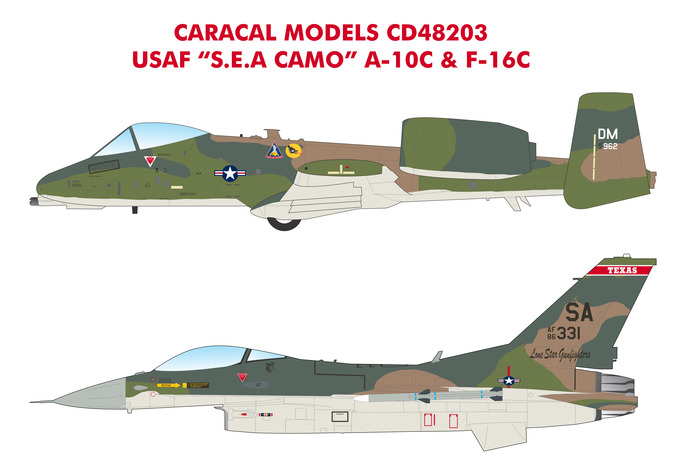 | Caracal Models - CD48203 - 1:48 | USAF "S.E.A. Camo" Heritage Fairchild A-10C & F-16C: In this decal sheet, we provide markings for two "heritage jets" from two different USAF units that were painted in the South East Asia (SEA) camouflage scheme. The A-10C belongs to the USAF A-10 Demonstration Team and wears the heritage scheme to honor 355th TFW's contribution to the Vietnam War; and the F-16C is from the 149th FW. The options on this decal sheet are: A-10C 78-1962, USAF A-10 Demonstration Team, 2021 Lockheed-Martin F-16C 86-0331, 149th FW heritage jet, 2021 More | Aircraft decals (military) | Catalogue | £11.99 | |
 | Caracal Models - CD48231 - 1:48 | McDonnell RF-4C Recce Phantoms - Part 1 Ten marking options for camouflaged USAF RF-4C reconnaissance Phantoms, from the Vietnam War era to the late 1980s. The RF-4C Phantom, a reconnaissance variant of the iconic F-4C fighter, played a crucial role in the USAF's tactical aerial reconnaissance during its service life. In USAF service, the RF-4C served in bases around the world and captured invaluable intelligence in conflict zones from the Vietnam War era through to the Gulf War. Notably adept at high-speed, low-altitude missions, the RF-4C excelled in its role and was a key component in various USAF squadrons. This decal set with nine unique options celebrates the distinguished history of the RF-4C Recce Phantoms. The markings options on this decal sheet are: RF-4C 65-0905 "Tumbleweed", 11st TRS, Udorn RTAFB RF-4C 64-1006. 30th TRS, RAF Alconbury RF-4C 65-0927, 10th TRW, RAF Alconbury RF-4C 63-7760 "City of Seymour" RF-4C 64-1081, 165th TRS - Kentucky ANG RF-4C 65-0886, 192nd TRS - Nevada ANG RF-4C 63-7758, 160th TRS - Alabama ANG RF-4C 68-0595, 91st TRS RF-4C 68-0567 "Starize", 1st TRS, RAF Alconbury Accurate stencilling and national insignia to build any one of the options is included. The stencilling sheet included in this set is also available as a separate product (Caracal Models Basics CDB48012). All of sheets in this set were professionally screen printed by Cartograf in Italy. More | Aircraft decals (military) | Catalogue | £15.99 | |
 | Hi Decal - HD48033 - 1:48 | McDonnell F-4E Phantom II 'Pharaoh's Ghosts' (4) 222nd Tactical Fighter Brigade, Egyptian Air Force: * 66-0366 / 7813 in disruptive 'Compass Ghost Grey' camouflage, 1980, * 67-0289 / 7827 in 'South East Asia' camouflage with orange & black quick ID panels, 1983, * 67-0341 / 7818 in 'Hill One' scheme, seen in 1988, * 67-0239 / 7817 in 'Hill Two' scheme with orange & black quick ID panels, 1990. Before being sold to Egypt, this Phantom was credited with the downing of a Vietnamese Mikoyan MiG-21 in August 1972, when serving with the USAF 58th TFS. More | Aircraft decals (military) | Catalogue | £9.99 | |
 | SAM Publications - MDFSD09 - No Scale | MDFSD9 Scaled Down #9 Fairchild A-10A Warthog/Thunderbolt II. The A-10 'Warthog' owed its birth to two influences - the inadequacies of the Close Air Support aircraft used in Vietnam, and the need to counter Soviet armoured might in Europe. During the Vietnam War the Air Force regarded CAS as their domain but was hard pressed to find an aircraft with both the range and loiter capacity to fulfil this need. They did obtain quantities of the old but excellent piston-powered Douglas A-1 Skyraider originally developed for the Navy, which soon earned the appreciation of the ground-pounders by its ability to carry a huge warload, dish out and take punishment, and remain on station for an extended period of time. Late in the war the USAF shifted the CAS mission to the jet-powered A-7 Corsair II, which had been developed for a US Navy requirement for a carrier-based strike fighter to replace the A-4 Skyhawk. The Corsair was an excellent aircraft, but it was designed for the strike-interdiction role, not for the battlefield CAS mission. The USAF therefore began to put together an AX - 'Attack Experimental' program to develop a dedicated CAS aircraft that could do the job far better than the Corsair, match the Skyraider in warload and endurance, but be substantially faster while being extremely maneuverable. The aircraft would also need to be highly survivable through the use of armour and redundant systems, include twin engines and be armed with a fast-firing Gatling-type gun. More | Aircraft books | Limited Availability | £14.99 | |
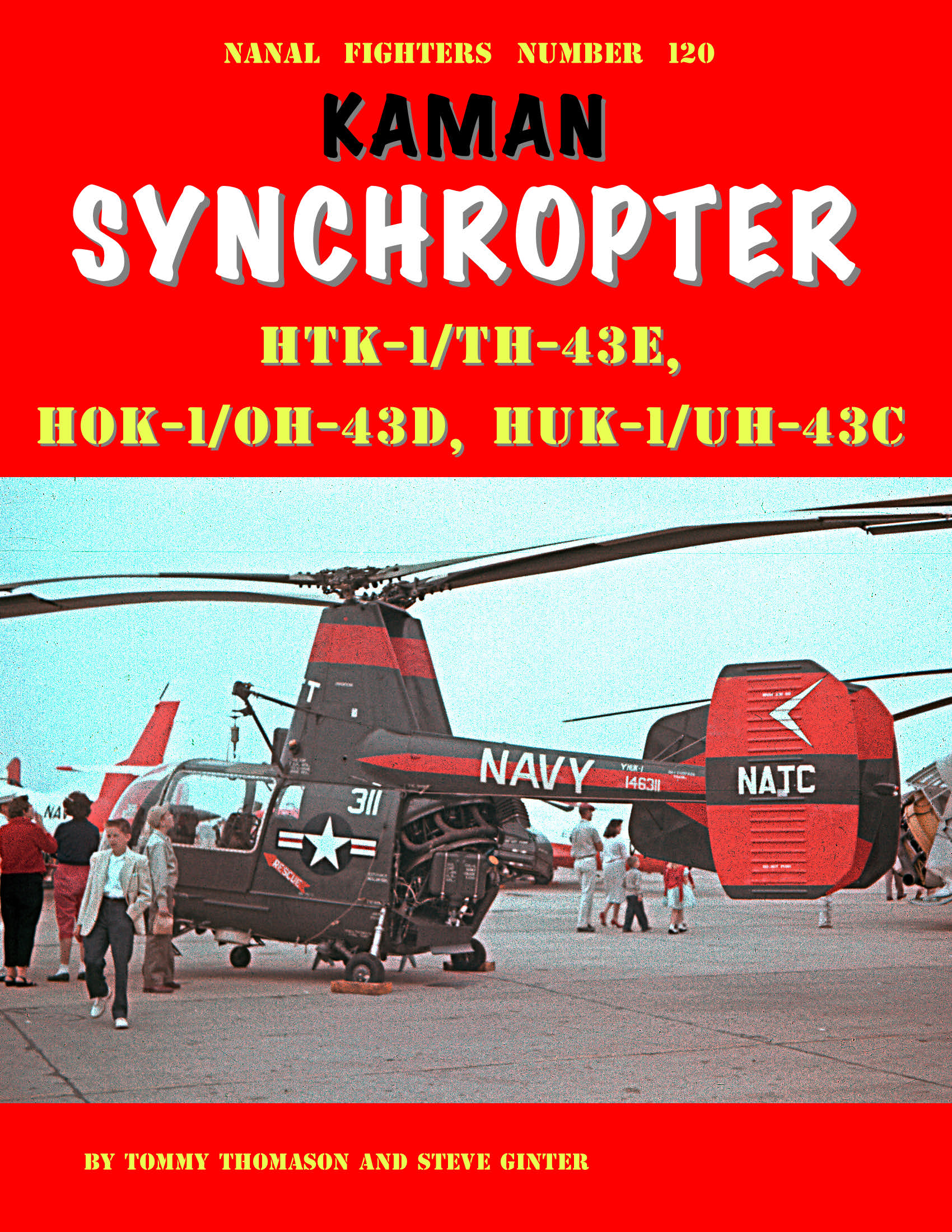 | Naval Fighters - NF120 - No Scale | KAMAN SYNCHROPTER HTK-1/TH-43E, HOK-1/OH-43D, HUK-1/UH-43C By Tommy Thomason and Steve Ginter ISBN: 979-8-9899509-4-2 80 pages, 174 B&W photos, 8 color photos, 51 drawjngs, 15 patches In 1945, there were several aircraft companies involved in helicopter design, test and production in America. The smallest and least well financed one had just been incorporated by a 26 year old Charles Kaman to pursue a synchropter design and flight control concept which featured a pair of intermeshing rotors with small sero-tabs attached to the blades to twist them in flight. This design proved the Kaman's to be much easier to control in a hover than a conventional helicopter and eliminated the need of a tail rotor. After flight testing two company-funded prototypes, Kaman sold or leased a handful of these synchropters primarily for use as crop dusters. Fortunately, just as the fledgling company was on the brink of bankrupcy in 1949, the Navy became interested. The Navy ended up purchasing for itself and the Marines; 29 small 3-place HTK-1/TH-43E trainers, 83 4-place Marine HOK-1/OH-43D observation and rescue helicopters, and 24 5-place HUK-1/UH-43C transport and utility helicopters. These aircraft were operated into 1965 and the design was eventually developed into the turbine powered H-43B/F Huskie used by the USAF in Vietnam. AMPs has a 1/48 model kit of the HOK/HUK More | Aircraft books | Catalogue | £28.99 | |
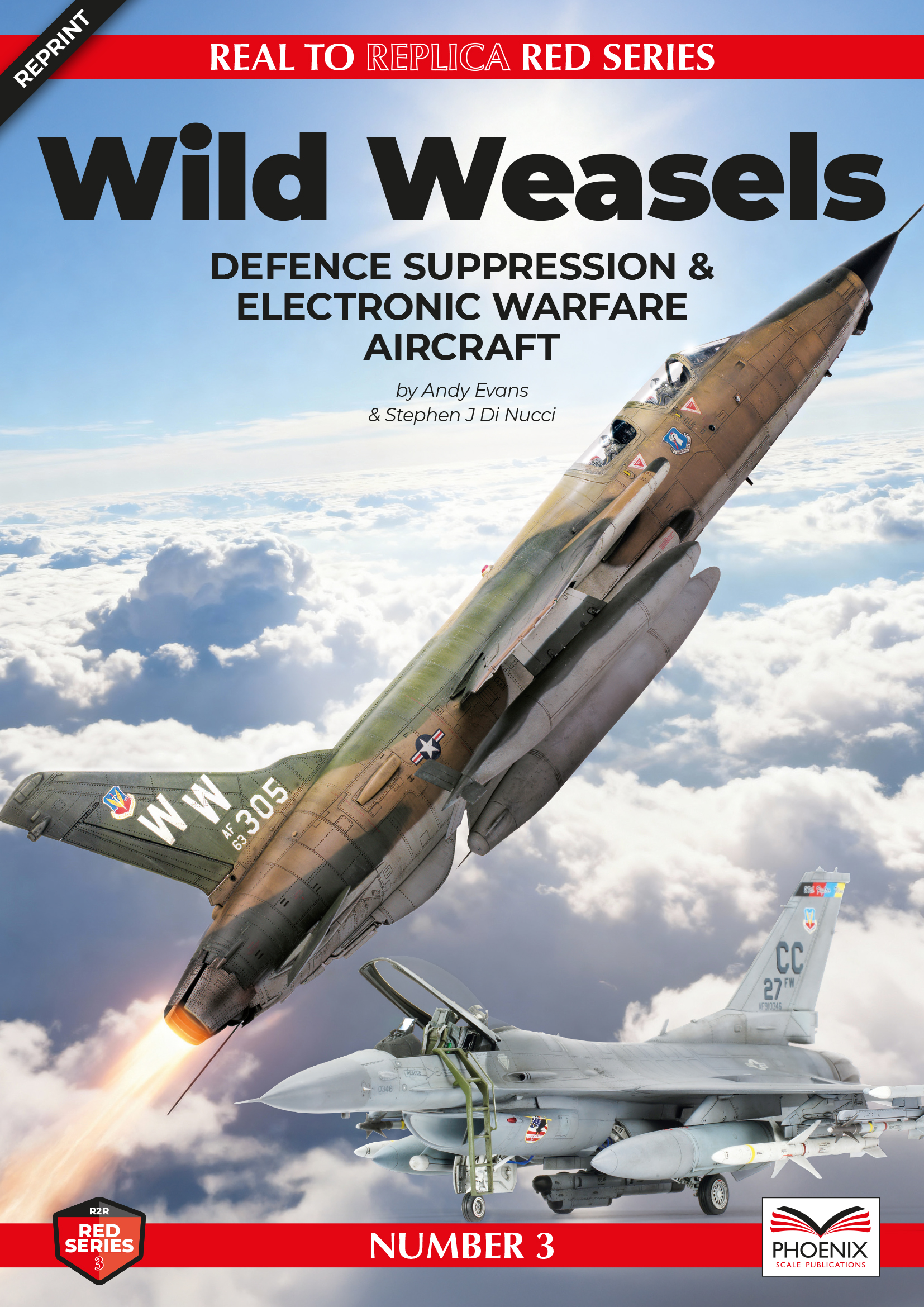 | Phoenix Scale Publications - R2RRED03 - No Scale | LIMITED RE-PRINT! Wild Weasels Defence suppression & electronic warfare aircraft by Andy Evans & Stephen J Di Nucci Real To Replicas Red series Number 3 Suppression of Enemy Air Defences (SEAD) are military actions to subdue enemy surface-based air defences, including not only surface-to-air missiles (SAMs) and anti-aircraft artillery (AAA), but also interrelated systems such as early-warning radar and command, control, and communication (C3) functions, while also marking other targets to be destroyed by an air strike. Suppression can be accomplished both by physically destroying the systems or by disrupting and deceiving them through electronic warfare. In modern warfare SEAD missions can constitute as much as thirty percent of all sorties launched in the first week of combat and continue at a reduced rate through the rest of a campaign. One quarter of American combat sorties in recent conflicts have been SEAD missions. Electronic warfare (EW) on the other hand is any action involving the use of the electromagnetic spectrum (EM spectrum) or directed energy to control the spectrum, attack an enemy, or impede enemy assaults. The purpose of electronic warfare is to deny the opponent the advantage of, and to ensure friendly unimpeded access to the EM spectrum. EW can be applied from air, sea, land, and/or space by manned and unmanned systems, and can target communication, radar, or other military and civilian assets. These airborne roles were in their infancy during World War II and the Korean War but came to prominence during the Vietnam War with the advent of the dedicated 'Wild Weasel' role, a code name given by the United States Air Force to an aircraft, of any type, equipped with anti-radiation missiles and tasked with the SEAD - destroying the radar and surface-to-air missile installations of enemy air defence systems. The 'Wild Weasel' concept was developed by the United States Air Force in 1965, after the introduction of Soviet SAMs and their downing of US strike aircraft over the skies of North Vietnam. 'Wild Weasel' tactics and techniques began their development in 1965 following the commencement of Operation 'Rolling Thunder' and were later adapted by other nations The term 'Wild Weasel' derives from Project 'Wild Weasel', the USAF development program for a dedicated SAM-detection and suppression aircraft. The technique was also called an 'Iron Hand' mission, though technically this term referred only to the suppression attack before the main strike. Originally named 'Project Ferret', denoting a predatory animal that goes into its prey's den to kill it, the name was changed to differentiate it from the code-name 'Ferret' that had been used during World War II for radar counter-measures bombers. In brief, the task of a Wild Weasel aircraft is to bait enemy anti-aircraft defences into targeting it with their radars, whereupon the radar waves are traced back to their source, allowing the Weasel or its teammates to precisely target it for destruction. Since then, SEAD and EW has been used in the Gulf Wars an in NATO operations over Bosnia and Kosovo. The unofficial motto of the Wild Weasel crews is 'YGBSM' " 'You Gotta Be Shittin' Me'. This appears prominently on the logo patch of some squadrons. As the story goes, this was the response of Jack Donovan, a former B-52 EWO (Electronic Warfare Officer), whereupon learning that he was to fly back seat to a self-absorbed fighter pilot while acting as flypaper for enemy SAMs, his exact words were: 'I'm gonna fly with you, and we're gonna shoot a SAM site before it shoots us? You gotta be shittin' me'. In this book we examine the background of these specialised roles from World War II, through Vietnam to modern day, and look at the aircraft that undertake them More | Aircraft books | Catalogue | £27.99 | |
 | Warpaint Series - WPS100 - No Scale | Republic F-84F Thunderstreak and RF-84F Thunderflash. Fraught with engine and aerodynamic teething problems that resulted in its missing the Korean War for which it was intended, the F-84F Thunderstreak, initially seen as languishing in the shadow of the more well-known and proven F-86 Sabre, matured to become a formidable fighter-bomber that served not only with the USAF's Tactical and Strategic Air Commands, but also with numerous European air forces for many of which it also offered the first experience in swept wing jet fighter operation. It provided a much-needed deterrent during the critical early years of the Cold War and the 1960s, especially with NATO air forces, where it normally replaced its straight-wing predecessor, the F-84 Thunderjet. No fewer than 2,711 examples of the Thunderstreak were built, so that for a time it was the fighter most in widespread use in Europe, becoming the backbone of the Alliance's combat element. In contrast, its service with the USAF was rather short-lived when newer fighters such as the F-100 Super Sabre and F-4 Phantom with superior and supersonic performance supplanted it in service. However, with the outbreak of the Vietnam War, when these modern fighters and the USAF's other more valuable combat aircraft were deployed to Southeast Asia, the USAF recalled the Thunderstreak for another spell of frontline service in defence of mainland United States. It was only the French who used it in anger when it carried out strikes on Egyptian targets during the Suez Crisis of 1956. Sharing the Thunderstreak's main characteristics including its vices and virtues, its offshoot, the RF-84F Thunderflash, was considered to be the best photo-reconnaissance fighter of its time, capable of carrying six cameras in its abundant nose in 15 different combinations. The Thunderflash, too, was exported to most of NATO's air forces, as well as to the Republic of China Air Force where it carried out routine overflights over mainland Communist China in a hostile environment. The French, too, used it in a firing war, again in Suez, while the Turkish Air Force similarly employed it during its brief war with Greece in 1974. Again, the advent of such types as the RF-101 recce Voodoo and the RF-4C Phantom replaced it in USAF service, while the F-104 was the type that most replaced it in NATO air arms. But both the Thunderstreak and Thunderflash remained in service for a long period in some of the European air forces, the last Thunderflash being retired from the Greek Air Force in 1991. This latest Warpaint title gives an account of these two types' service, with detailed lists of serials, squadron service, production and variants in 80 pages of text accompanied by no fewer than 190 colour and B&W photos, eight pages of colour artwork by and foldout scale drawings, describing the development and operational career of these remarkable aircraft. This book is written by Charles Stafrace and is superbly illustrated by Richard J.Caruana. More | Aircraft books | Catalogue | £20.00 | |
 | Warpaint Series - WPS104 - No Scale | General-Dynamics F-111 Aardvark and EF-111A Raven General Dynamics F-111 Aardvark & EF-111A Raven - By Charles Stafrace Controversy and competency is the best way to describe the first variable geometry combat aircraft to enter operational service anywhere in the world. This was the F-111 Aardvark, the typical Cold War 'below the radar' strike bomber. It was born in one of the most politically-motivated and incompetent procurement processes ever, and experienced a troublesome gestation period with spiralling costs in development and production, and an unimpressive first deployment to Vietnam in 1967. Yet, all this was forgotten when the F-111 matured and proved itself to become a devastating weapon and a formidable penetration strike aircraft in its second tour in Southeast Asia in 1972-73, helping to prove that its sophisticated attack and terrain-following radar systems enabled the delivery of a large number of ordnance with unerring accuracy at ultra-low level in a hostile environment. Thus equipped, the F-111's long-range all weather missions on targets in Libya in 1986 and in the Gulf War of 1991 confirmed that the Aardvark had become the spearhead of Tactical Air Command and USAFE, and for many years represented the cutting edge of NATO's deep strike forces. It is enough to say that during the Gulf War only two aircraft types were allowed to attack downtown Baghdad and avert collateral damage: the F-117 and the F-111. The longer-span FB-111 was developed with bombing avionics for undertaking the nuclear delivery role with Strategic Air Command, while later still a major re-do resulted in the EF-111A Raven in which were installed the most sophisticated and state-of-the-art electronic countermeasures and signals jamming systems available to assist in SEAD missions. The swing-wing F-111 was a familiar sight in Britain in the 1980s and early 1990s when it equipped two USAFE wings at Lakenheath and Upper Heyford, the latter base also hosting a squadron of EF-111As during part of the same period. The F-111 tactical strike fighter served with the RAAF as well, and was retired from service as recently as 2010. The F-111 was even ordered by the Royal Air Force in the late 1960s to replace the cancelled TSR.2 but was then itself cancelled at great expense amid nationwide controversy to which a whole chapter is dedicated in this publication. This new Warpaint title explains the F-111's development, service history, failures and successes, in all its versions with both USAF and RAAF, with full text, specification and squadron tables and more than 180 photos, most of which are in colour. This book is written by Charles Stafrace and is superbly illustrated by Richard J.Caruana. [EF-111A Raven F-111A F-111A/F-111B F-111C F-111C/G F-111D / F-111E F-111D/F F-111F F-111G] More | Aircraft books | Catalogue | £23.00 | |
 | Warpaint Series - WPS127 - No Scale | Cessna T-37 A/B/C 'Tweet' and the A-37A/B 'Dragonfly' By Kev Darling When USAF went searching for a new jet trainer in the early 1950's to replace the Lockheed T-33, it came as a great surprise to all when Cessna, best known for producing light aircraft, actually won the competition. Little did anyone realise that the T-37, the new training aircraft's designation, would stay in service for fifty years. Along the way the fleet had many rebuilds and is reckoned to have conservatively trained over 500,000 pilots to wings standard. Along the way it garnered many nicknames including 'Tweet, Tweety Bird' and the 'Screaming Dog Whistle'. Had the conflict in Vietnam been avoided this might of been the end of the line for the multi coloured trainer. As America became more involved with the conflict in South East Asia USAF was on a buying spree for all of the latest all singing, all dancing fighter attack aircraft. However, despite their supersonic capability and state of the art avionics these mighty behemoths were not suited to the close air support role. The answer would be to recall some stored early T-37's from the boneyard at Davis-Monthan and in consultation with Cessna turn the 'Tweet' into an attack aircraft. Few high tech gizmo's were needed although the new fighter would sport a minigun in the nose. Pylons were added under the strengthened wings, tip tanks, from the T-37C, were added and engines with a bit more grunt were fitted. The designated unit destined to fly the A-37A 'Dragonfly ' was the 8th Special Operations Squadron. Such was their dedication that a shack on the bombing range was used a measuring point for bombing accuracy. They knew they had succeeded when one pilot blew up the Shack exclaiming the 'SHACK' call over the radio very loudly. The A-37A was soon followed by the 'B' model that was vastly improved and went onto serve globally for many years especially in Latin American countries where a few linger on. This book is written by Kev Darling and is supported with artwork by John Fox. More | Aircraft books | Catalogue | £20.00 | |
Hannants Search Engine
Convert Currency
Copyright © 2001-2026 H. G. Hannant Limited. All rights reserved. | Website by Dessol
Privacy Policy | Cookie Information | Switch to Mobile Version
